
Workplace stress and burnout are not small side issues for Canadian organizations. They affect focus, sleep, decision making, communication, retention, disability claims, and the way people show up for each other at work.
For HR managers, wellness committees, and business owners, the challenge is not always knowing that stress matters. Most leaders already know that. The harder part is choosing support that is practical, credible, easy to deliver, and useful for employees in real life.
A breathing-based stress and burnout program can be one part of that support. Not as a replacement for therapy, medical care, workload review, leadership training, or proper psychological health and safety practices. But as a practical tool employees can learn, feel, and use during the workday.
Breathing is already happening all day. Most people take around 20,000 breaths in a 24-hour period. The question is whether people understand how their breathing patterns affect stress, recovery, sleep, focus, and resilience, and whether they have simple tools they can use when pressure builds.
Why Canadian workplaces are paying closer attention to stress and burnout
Canadian employers are increasingly being asked to support psychological health and safety at work. This is not only about crisis response. It is also about prevention, education, culture, and giving people usable tools before they are completely overwhelmed.
Several Canadian statistics help explain why this matters:
| Workplace mental health issue | Canadian context |
|---|---|
| Disability claims | The Government of Canada reports that about 30 percent of disability claims are related to mental health problems and mental illness. |
| Annual prevalence | About 1 in 5 Canadians experiences a mental health problem or illness each year. |
| Economic cost | Mental health problems and illnesses cost Canada about $50 billion per year. |
| Missed work | The Mental Health Commission of Canada has reported that, in any given week, 500,000 Canadians do not go to work due to a psychological health issue. |
| Work as a stressor | Federal workplace psychological health guidance reports that 47 percent of working Canadians consider work to be the most stressful part of daily life. |
| Program ROI | Deloitte Canada (2019) found a median yearly ROI of CA$1.62 for workplace mental health programs, rising to CA$2.18 for programs in place three or more years. |
These numbers do not mean every workplace needs another complicated program. In many cases, HR teams are already juggling benefits, EAPs, accommodation requests, return to work planning, leadership training, wellness days, and staff engagement.
The opportunity is to add something practical and accessible that people can actually use. A breathing-based program fits well when it is positioned as education and skill building, not as a cure or a replacement for deeper organizational work.
What is a breathing-based stress and burnout program?
A breathing-based stress and burnout program teaches employees how breathing patterns can affect stress, energy, recovery, focus, and physical tension. It gives them practical breathing tools they can use during everyday moments such as before a meeting, after a difficult conversation, during a stressful commute, or before sleep.
A strong workplace breathing program is not just a relaxation session. It should help employees understand how they currently breathe and why that matters.
That usually includes education around:
| Area | What employees learn |
|---|---|
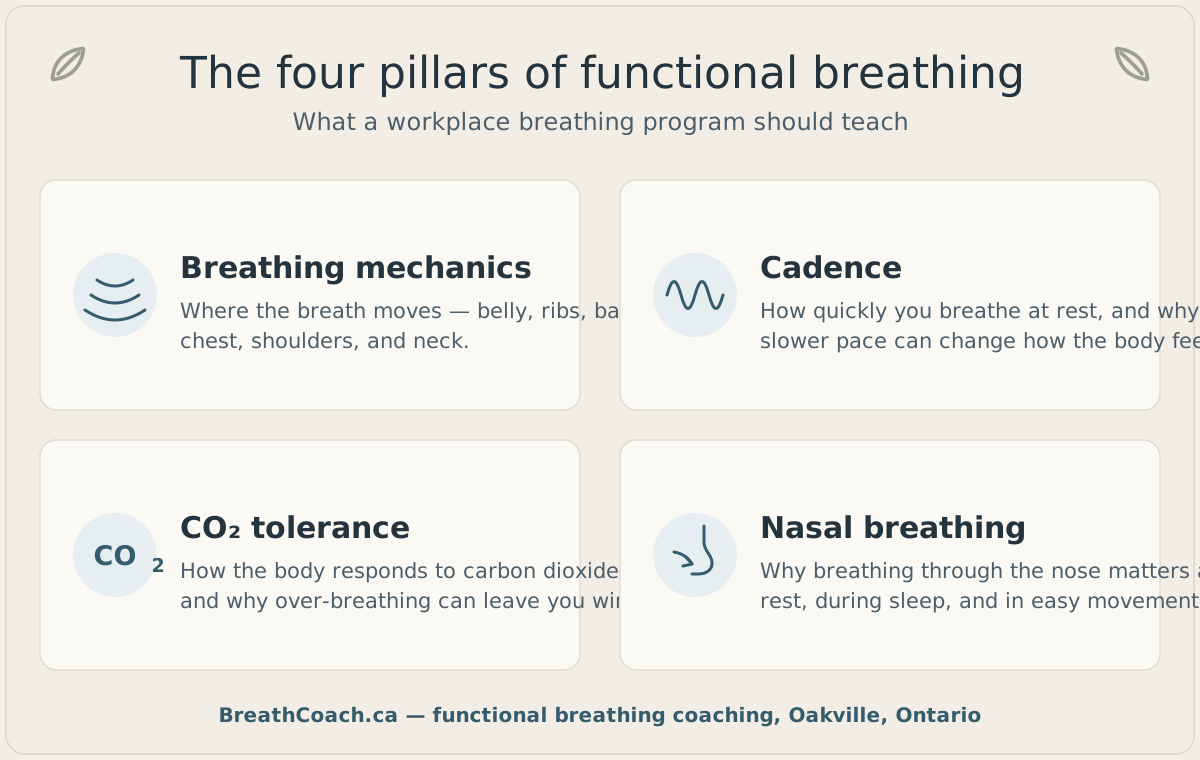
| Breathing mechanics | Where the breath moves in the body, including the belly, ribs, back, chest, shoulders, and neck. |
| Cadence | How quickly someone breathes at rest and why pace can affect how the body feels. |
| CO₂ tolerance | How the body responds to carbon dioxide and why over breathing can contribute to symptoms such as breathlessness, tension, or feeling wired. |
| Nasal versus mouth breathing | Why nasal breathing matters at rest, during sleep, and during lower intensity activity. |
| Everyday application | How to use short breathing tools without needing equipment, floor work, or a long break. |
For HR leaders, this matters because the program becomes more than a wellness activity. It becomes a skill-based learning experience. Employees leave with a clearer understanding of their own patterns and a few tools they can realistically repeat.
How breathing connects to workplace stress
When people are under pressure, their breathing often changes before they notice it. They may breathe higher into the chest, hold their breath, sigh often, breathe through the mouth, or take more breaths per minute than they need at rest.
These patterns can become familiar. Over time, the body may start to treat a regular workday as if it requires a higher level of effort than it actually does.
This is why breathing can be useful in workplace wellbeing. It gives people a direct way to notice what is happening in their body and shift their response in the moment.
A breathing-based program can help employees notice common patterns such as:
| Pattern | How it may show up at work |
|---|---|
| Upper chest breathing | Neck tension, shoulder tightness, feeling like the breath is stuck high. |
| Breath holding | Bracing during emails, meetings, deadlines, presentations, or conflict. |
| Fast resting breathing | Feeling wired, rushed, unsettled, or unable to settle between tasks. |
| Mouth breathing at rest | Dry mouth, lower breathing efficiency, or difficulty keeping the breath slow. |
| Poor recovery after stress | Staying activated long after the stressful moment has passed. |
The goal is not to make people breathe perfectly. The goal is awareness, choice, and recovery.
A functional breathing approach often emphasizes breathing that is lower, lighter, and more horizontal through the body. If someone feels every breath in the shoulders, they may be taking in more air than they need or relying on accessory muscles more than necessary. Smaller, slower, more efficient breathing often feels very different once people experience it.
Where breathing fits within a Canadian workplace wellbeing strategy
Breathing-based programs work best when they are one layer of a broader wellbeing strategy.
They can support:
| HR priority | How breathing education can help |
|---|---|
| Burnout prevention | Gives employees practical tools for daily recovery, not only after stress becomes unmanageable. |
| Resilience training | Helps people build awareness of how they respond to pressure and how they recover. |
| Psychological health and safety | Supports a culture where stress is addressed proactively and practically. |
| Leadership development | Gives managers a tool they can use before difficult conversations, presentations, or decision making. |
| Wellness committee programming | Offers an accessible session that does not require equipment, fitness level, or special clothing. |
| Healthcare and helping teams | Supports workers who spend much of their day caring for others and often override their own stress signals. |
| Hybrid and office teams | Provides tools that work at a desk, in a meeting room, online, or between appointments. |
This kind of program is especially useful when HR wants something practical and low barrier. People do not need to change clothes, lie on the floor, bring a mat, or share personal information. A good session can be done seated, standing, online, or in person.
A brief note on CSA Z1003 and psychological health and safety
In Canada, workplace mental health is often discussed alongside psychological health and safety. CSA Z1003 is the National Standard of Canada for Psychological Health and Safety in the Workplace. It gives organizations a voluntary framework to help promote psychological health and reduce psychological harm at work.
HR teams do not need to implement the full standard all at once to take useful action. A practical starting point is to look at what employees are already experiencing, what supports are already in place, and where small education-based programs can help fill a gap.
Breathing-based education is not a full psychological health and safety strategy on its own. It can, however, support the prevention and education side of that work. It gives employees language and tools for noticing stress in the body and responding earlier.
What does the research say about breathwork and stress?
The evidence for breathing practices is promising, but it should be described honestly.
A 2023 meta-analysis of randomized controlled trials published in Scientific Reports found that breathwork was associated with lower self-reported stress compared with control conditions, with a small to medium effect size. The same review also found significant effects for anxiety and depressive symptoms. The authors noted that more research is needed and that study quality varies.
That is the right level of claim for workplace programming. Breathing practices may help with stress, anxiety, mood, and wellbeing. They are not a magic solution, and they should not be presented as a treatment for medical or mental health conditions.
Another study, published in Cell Reports Medicine in 2023, compared brief daily breathwork practices with mindfulness meditation. Participants practised for five minutes daily over one month. The study found that breathwork, especially an exhale-focused practice called cyclic sighing, improved mood and reduced physiological arousal.
For workplace programs, the practical takeaway is simple: short breathing practices can be accessible, repeatable, and useful for many people. The key is to teach them safely, clearly, and in a way that fits real working life.
What should HR look for in a breathing-based workplace program?
Not all breathing programs are the same. Some are closer to meditation. Some are performance focused. Some are intense and emotional. Some are gentle, educational, and practical.
For a Canadian workplace setting, HR should look for a program that is:
| What to look for | Why it matters |
|---|---|
| Practical | Employees should leave with tools they can use at work, at home, or before sleep. |
| Evidence informed | Claims should be modest, clear, and grounded in current research. |
| Accessible | The session should work for different bodies, roles, ages, and comfort levels. |
| Non clinical | The facilitator should not position the program as therapy or medical treatment. |
| Safe and adaptable | Employees should not be pushed into intense breath holds or practices that feel overwhelming. |
| Easy to explain internally | HR should be able to describe the session clearly to leadership and staff. |
| Connected to daily stress | The program should relate breathing to meetings, workload, sleep, communication, and recovery. |
One helpful question for HR to ask is: will employees understand what to do differently after the session?
If the answer is yes, the program is much more likely to be remembered and used.
What should a workplace breathing session include?
A strong session should include enough science to build credibility, enough self assessment to make it personal, and enough practice to make it useful.
For most teams, a good structure includes:
- A plain English explanation of how breathing changes under stress.
- Simple assessments so participants can notice their own patterns.
- Education around mechanics, cadence, CO₂ tolerance, and nasal versus mouth breathing.
- A few practical breathing tools that can be used during the workday.
- Time to connect the tools to real situations such as sleep, meetings, focus, presentations, conflict, or recovery after a busy shift.
The session should not feel overly medical or overly spiritual. Employees should not feel like they have to perform, share private information, or do anything that feels uncomfortable.
For office teams, the examples might be email overload, back to back meetings, screen fatigue, and difficulty shutting off after work.
For healthcare or helping professionals, the examples might be long shifts, emotional load, patient or client care, and the habit of pushing through stress until the end of the day.
For leadership teams, the examples might be decision fatigue, public speaking, conflict, and the pressure to stay steady for everyone else.
For community-facing teams, the examples might be constant interaction, unpredictable demands, and needing a reset between people.
The best programs make breathing feel relevant to the work people actually do.
How BreathCoach.ca approaches workplace breathing programs
The Breathe Better Feel Better Workshop is a practical workplace session designed to help people understand how they breathe and learn tools they can use right away.
The workshop is not about turning employees into breathwork experts. It is about giving them a better understanding of their own breathing patterns and showing them how small changes can support stress, focus, sleep, and recovery.
In a typical session, participants are introduced to functional breathing concepts such as breathing mechanics, nasal versus mouth breathing habits, CO₂ tolerance, and resting breathing cadence. This helps people understand how stress can change breathing patterns and gives them practical tools they can use during the workday.
The tone is educational, practical, and approachable. No equipment is required. No floor work is required. The session can be adapted for different groups, including corporate offices, healthcare teams, leadership groups, gyms, community organizations, and wellness committees.
BreathCoach.ca is Ontario focused, with travel available for events and workplace programs. Sessions can be designed for lunch and learns, wellness days, staff development, leadership offsites, or ongoing workplace wellbeing initiatives. A printable workshop overview is available to forward to your leadership team or wellness committee.
When a breathing-based program is a good fit
A breathing-based workshop may be a good fit if your organization is noticing:
| Workplace signal | Why breathing may help |
|---|---|
| High stress levels | Employees may benefit from practical tools they can use in the moment. |
| Burnout concerns | Breathing education can support recovery habits and body awareness. |
| Poor sleep or fatigue conversations | Breathing patterns can affect how people settle at night and recover after pressure. |
| Meeting overload | Short breathing tools can be used between calls or before presentations. |
| Emotionally demanding work | Staff may need simple ways to reset between clients, patients, or difficult interactions. |
| Wellness programming fatigue | A practical, skills-based session can feel different from generic wellness advice. |
| Leadership pressure | Leaders can use breathing tools before hard conversations or high stakes decisions. |
It may not be the right standalone solution if the real issue is unsafe workload, harassment, chronic understaffing, poor leadership behaviour, or lack of access to clinical support. In those cases, breathing can still be a helpful personal tool, but it should not be used to avoid fixing the source of the problem.
That distinction matters. Employees can usually feel the difference between genuine support and a wellness activity being used as a bandage.
How to make the program more useful after the session
A single workshop can be valuable, especially when people leave with practical tools. HR can increase the impact by making the content easy to revisit.
Useful follow up options include:
| Follow up idea | Why it helps |
|---|---|
| A short recap email | Reinforces the main takeaways and keeps the tools easy to find. |
| A one page breathing guide | Gives employees a quick reference without needing to remember everything. |
| Manager reminders | Helps leaders model short resets before or after high pressure moments. |
| Wellness committee prompts | Keeps the topic alive in a simple, low pressure way. |
| A follow up session | Allows employees to ask questions and build on what they noticed. |
The goal is not to add more work for HR. The goal is to make the workshop easier to use after the room clears or the Zoom call ends.
How to talk about breathing programs internally
When HR introduces a breathing-based program, the wording matters. Some employees may be curious. Some may be skeptical. Some may think breathing sounds too basic. Others may worry it will be too spiritual or too personal.
Clear, practical language helps.
You might describe it this way:
This session is a practical workshop on how breathing patterns can affect stress, focus, recovery, and sleep. Participants will learn how to notice their own breathing habits and try simple tools they can use during the workday. No equipment, fitness level, or previous experience is required.
That wording keeps the session accessible and professional. It also avoids overpromising.
Bringing breathing into your workplace wellbeing strategy
A breathing-based stress and burnout program is not about asking employees to do one more thing. It is about helping them understand something they are already doing all day.
When people learn how to notice their breath, slow down their pace, breathe lower in the body, and recover after stress, they gain a practical tool they can use almost anywhere.
For HR managers, wellness committees, and business owners, that kind of support can be a useful addition to a broader mental health and wellbeing strategy. It is accessible. It is easy to deliver. It gives employees something they can feel and apply right away.
If you are exploring a breathing-based stress, burnout, resilience, or wellbeing session for your workplace, you can reach out through the BreathCoach.ca contact page to ask about options for your team.